Intelligent campaigns
A campaign that cannot learn is expensive repetition
More content and more channels do not create momentum when every launch forgets what the last one taught you.
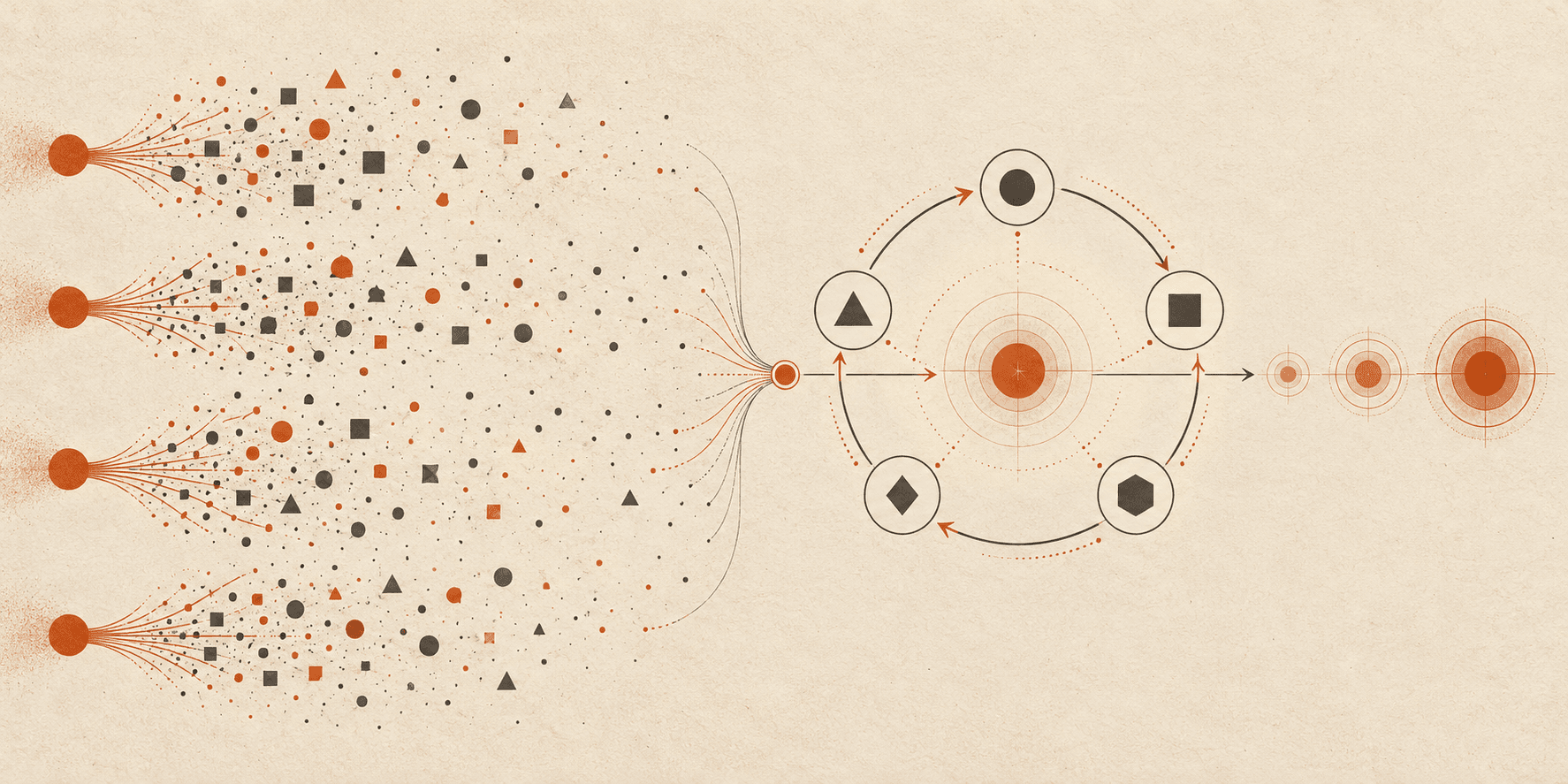
Campaign velocity is not how quickly the team launches again. It is how quickly evidence from one decision improves the next one.
Launch culture creates motion, not memory
Teams ship a campaign, watch a dashboard, write a recap, and begin the next brief. The activity is real. The learning often is not. Audience definitions drift, creative rationale disappears, conversion data arrives at a different grain, and the lesson becomes a sentence nobody can reuse.
The result is expensive repetition: new assets built on old uncertainty, with optimization confined to the media platform that reported it.
A learning campaign leaves a usable record
Every meaningful campaign decision should produce evidence the next decision can consume. That requires a shared structure for the hypothesis, audience, message, offer, exposure, response, downstream outcome, and confidence in attribution.
- —Preserve the campaign hypothesis beside the execution, not in a forgotten brief.
- —Connect channel response to customer and revenue outcomes at an honest grain.
- —Record what changed, why it changed, and what result followed.
- —Make unknown attribution visible instead of distributing false certainty.
The dashboard should change the next decision
Reporting earns its place when it changes allocation, creative, audience, timing, or the offer. If the dashboard is only a postmortem, it is documenting spend rather than directing growth.
Build the loop so that content, media, web behavior, CRM outcomes, and human judgment return to one decision system. Then the campaign does more than perform. It compounds.
Make it operational
Where is complexity hiding in your system?
An AI & Growth Systems Audit finds the opportunity, evidence, ownership, and constraints before you fund another impressive dead end.
Discuss an audit