Applied AI with controls
A human in the loop is not a control system
“A person reviews it” is not governance. The decision, evidence, authority, deadline, and fallback all need a design.
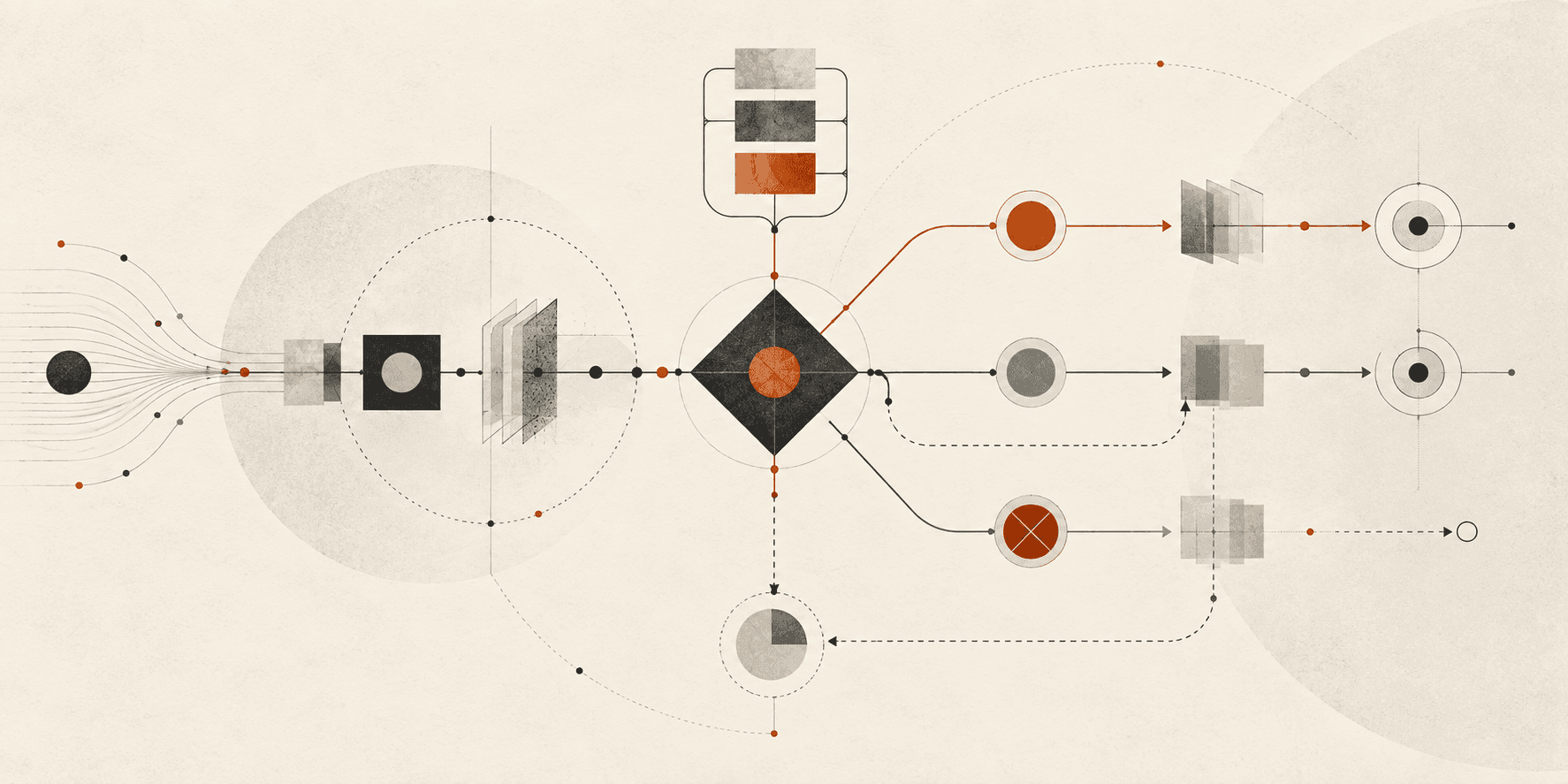
Adding a reviewer to an AI workflow does not create governance. Without a designed decision boundary, it creates an invisible queue and calls it control.
Review is not the same as accountability
A vague review step leaves five questions unanswered: who decides, what evidence they see, how long they have, what the system records, and what happens if they do nothing.
Without those answers, the human is not governing the workflow. They are absorbing its uncertainty.
Put approval at the decision boundary
The right approval point is immediately before an action becomes consequential or difficult to reverse. Low-risk classification can proceed automatically. Publishing, sending, changing access, committing funds, or updating a system of record should stop at a clear boundary.
- —Name the accountable role, not just a person who happens to be available.
- —Show the source, proposed action, uncertainty, and consequence together.
- —Record approve, reject, revise, expiry, and escalation as distinct states.
- —Verify the downstream result after approval; approval is permission, not completion.
The goal is bounded autonomy
Good human-in-the-loop design does not insert a person into every step. It expands safe autonomy inside explicit boundaries and preserves human judgment where consequence, ambiguity, or external commitment demands it.
Make it operational
Where is complexity hiding in your system?
An AI & Growth Systems Audit finds the opportunity, evidence, ownership, and constraints before you fund another impressive dead end.
Discuss an audit